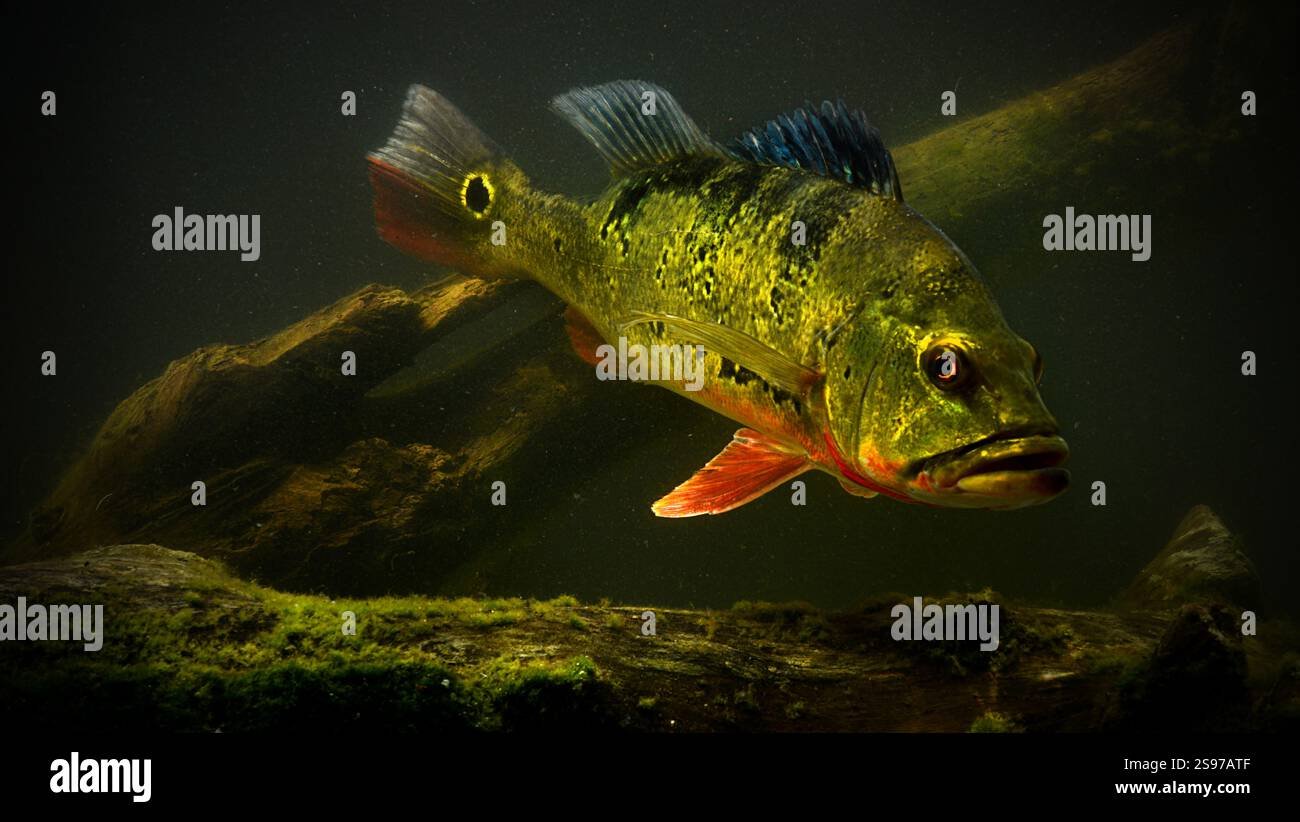

The peacock bass is one of the most exciting and aggressive freshwater fish in the world. Famous for its beautiful colors, powerful strikes, and strong fighting ability, the peacock bass is a dream catch for anglers. Whether you are a professional fisherman, a beginner, or simply a nature lover, learning about peacock bass can help you understand why this fish is so popular in sport fishing.
What is Peacock Bass?
The peacock-bass is a freshwater fish belonging to the cichlid family. Its scientific name is Cichla, and it is known for its bright colors, aggressive behavior, and incredible strength.
Despite the name “bass,” peacock bass is not a true bass. It is a cichlid species native to South America, mainly found in the Amazon River Basin.
Peacock-bass is famous for its:
- Powerful fighting ability
- Aggressive feeding habits
- Beautiful body colors
- Popularity in sport fishing
Anglers love this fish because it provides an intense and thrilling fishing experience.
Peacock-Bass Origin and Natural Habitat
The natural habitat of the peacock-bass is South America, especially in tropical freshwater environments. The fish is commonly found in:
- Amazon River Basin
- Orinoco River Basin
- Rivers and lakes in Brazil, Venezuela, and Colombia
Peacock bass prefers warm, clean freshwater with plenty of vegetation and structure.
Common Peacock-Bass Habitat Areas
Peacock-bass usually lives in:
- Slow-moving rivers
- Flooded forests
- Lakes and lagoons
- Streams with rocky or sandy bottoms
- Shallow water near vegetation
Since it thrives in warm water, it is mainly found in tropical climates
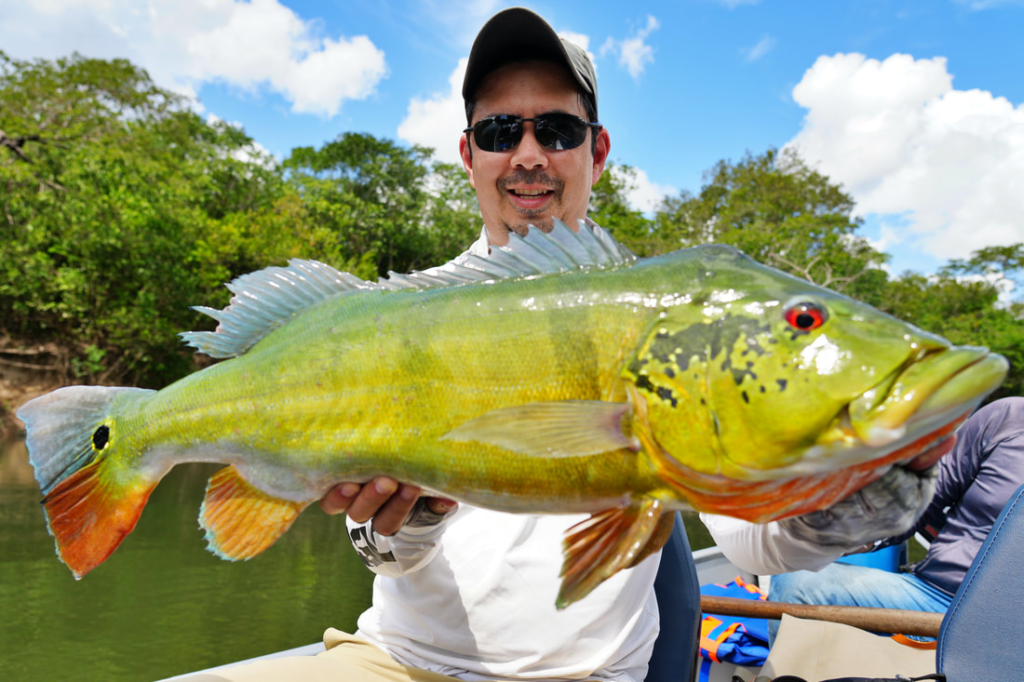
Peacock-Bass Species (Types of Peacock Bass)
There are multiple species of peacock-bass, but some are more popular and well-known than others.
Popular Peacock-Bass Species
1. Butterfly Peacock-Bass (Cichla ocellaris)
This is the most common peacock-bass species and is often found in Florida due to introduction programs. It has bright yellow-green colors with dark vertical bars.
2. Speckled Peacock-Bass (Cichla temensis)
This is the largest and most powerful peacock-bass species. It is considered the “trophy fish” for anglers in the Amazon.
3. Azul Peacock-Bass (Cichla piquiti)
This species has a bluish color, making it one of the most visually attractive peacock-bass types.
4. Popoca Peacock-Bass (Cichla kelberi)
This species is smaller but still aggressive and popular for sport fishing.
Each peacock-bass species has unique patterns, colors, and size potential.
Peacock-Bass Size and Weight
The size of a peacock-bass depends on the species and habitat.
Average Size
Most peacock bass typically grow between:
- 12 to 24 inches in length
- 3 to 10 pounds in weight
Trophy Size
The largest peacock bass species, Cichla temensis, can grow up to:
- 30+ inches
- 15 to 25 pounds (sometimes even more)
In the Amazon, trophy anglers often catch peacock bass weighing over 20 pounds, which is considered a major achievement.
Peacock-Bass Appearance and Color
One of the main reasons peacock bass is so famous is its stunning appearance.
Peacock-bass is known for:
- Bright green, yellow, and orange colors
- Dark vertical stripes on the body
- A black “eye spot” near the tail fin (used to confuse predators)
- Strong jaw structure
The colors of peacock bass can change depending on mood, breeding season, and water conditions.
During breeding season, the fish becomes more colorful and aggressive, making it easier to spot.
Peacock-Bass Behavior and Aggression
The peacock-bass is one of the most aggressive freshwater fish. It attacks prey with incredible speed and power. This aggressive nature is what makes it popular in sport fishing.
Why is Peacock-Bass So Aggressive?
Peacock-bass is aggressive because:
- It is a strong predator
- It protects its territory
- It defends its young during breeding season
- It hunts fast-moving prey
Unlike many fish, peacock bass does not hesitate. It strikes lures and bait with explosive force, which makes fishing very exciting.
Peacock-Bass Diet: What Does Peacock Bass Eat?
Peacock-bass is a carnivorous predator. Its diet mainly includes smaller fish and aquatic creatures.
Common Peacock-Bass Food
Peacock bass usually eats:
- Small fish (shad, minnows, tilapia)
- Shrimp and insects
- Crustaceans
- Frogs (in some cases)
- Small aquatic animals
In the Amazon, peacock-bass is known to hunt in groups, chasing schools of baitfish near the surface.
This feeding behavior is a great sign for anglers because surface activity often means peacock bass is nearby.
Where is Peacock-Bass Found Today?
Although peacock bass is native to South America, it has been introduced into other regions due to sport fishing demand and population control programs.
Peacock-Bass in Florida
Florida is the most famous place in the United States for peacock bass fishing. Butterfly peacock bass was introduced in Florida canals to help control invasive fish populations.
Today, anglers in Florida can catch peacock bass in:
- Miami canals
- Broward County waterways
- Palm Beach canals
- Warm freshwater lakes
Florida has become a top destination for peacock bass anglers.
Peacock-Bass in Other Countries
Peacock-bass has also been introduced in:
- Panama
- Hawaii
- Singapore
- Thailand
- Some parts of Africa
However, its most natural and trophy-level fishing experience is still found in the Amazon rainforest.
Best Time for Peacock-Bass Fishing
The best time for peacock-bass fishing depends on the region.
Best Season in the Amazon
In the Amazon, the best season is usually during the dry season, when water levels drop and fish gather in smaller areas.
Dry season often offers:
- Better visibility
- Easier fishing conditions
- More aggressive fish behavior
- Higher chances of catching trophy peacock bass
Best Season in Florida
In Florida, peacock-bass fishing is best during:
- Spring
- Summer
- Early fall
Since peacock-bass is a warm-water fish, it becomes less active in colder months.
Best Lures and Baits for Peacock-Bass
Choosing the right bait is extremely important for catching peacock-bass.
Best Live Bait for Peacock-Bass
Some of the best live baits include:
- Shiners
- Small tilapia
- Minnows
- Shrimp
Live bait works well because peacock-bass is a natural predator.
Best Artificial Lures for Peacock-Bass
Artificial lures are popular because peacock-bass attacks aggressively.
Top lures include:
- Topwater poppers
- Spinnerbaits
- Jerkbaits
- Crankbaits
- Soft plastic swimbaits
- Bucktail jigs
Topwater lures are especially exciting because peacock bass often strikes violently at the surface.
Peacock-Bass Fishing Techniques
Catching peacock-bass requires speed and patience. This fish moves quickly and attacks suddenly.
1. Topwater Fishing for Peacock-Bass
Topwater fishing is one of the most popular methods. It involves using surface lures that create splashing noise.
Best topwater lures:
- Poppers
- Walking baits
- Prop baits
This method is best in early morning and late afternoon.
2. Casting Near Structure
Peacock-bass likes to hide near:
- Rocks
- Logs
- Vegetation
- Docks and canal edges
Casting near structure increases your chances of getting a bite.
3. Fast Retrieval Method
Peacock-bass loves fast-moving prey, so a fast retrieve works well. Slow retrieval sometimes does not trigger its hunting instinct.
4. Jigging for Deep Peacock Bass
When peacock-bass stays deeper in water, jigging can be effective. Use jigs or soft plastics and bounce them near the bottom.
Peacock-Bass Fishing Gear Setup
To catch peacock-bass successfully, you need strong and reliable gear.
Recommended Rod and Reel
- Medium-heavy rod (6’6” to 7’)
- Spinning reel or baitcasting reel
- Smooth drag system
Recommended Fishing Line
- 20–40 lb braided line (best for heavy structure)
- 12–20 lb fluorocarbon leader
Since peacock bass fights hard and often jumps, strong line is important.
Hooks and Leaders
- Sharp hooks for solid hooksets
- Strong leaders for preventing breakage
Proper gear is essential because peacock bass can easily break weak equipment.
Peacock-Bass Fight and Strength
One of the most exciting things about catching a peacock-bass is its fight.
When hooked, peacock bass often:
- Makes powerful runs
- Jumps out of the water
- Shakes its head aggressively
- Tries to escape into structure
Many anglers compare the fight of peacock bass to saltwater fish because of its power and speed.
This is why peacock bass is considered one of the best sport fish in the world.
Peacock-Bass Breeding and Spawning
Peacock-bass usually spawns during warmer seasons. During spawning, the fish becomes extremely territorial.
Spawning Behavior
Peacock bass parents:
- Guard their eggs aggressively
- Protect baby fish (fry)
- Attack anything that comes near the nest
During spawning, peacock bass is easier to catch because it attacks lures to protect its territory.
However, anglers should practice ethical fishing and release breeding fish when possible.
Peacock-Bass vs Largemouth Bass
Many people compare peacock bass with largemouth bass, but they are different fish.
Main Differences
Peacock-Bass
- A cichlid species
- Native to South America
- More aggressive and faster
- Prefers warm tropical water
- Bright colors and stripes
Largemouth Bass
- True bass species
- Native to North America
- Less colorful
- Can survive colder water
- Often stays near weed beds and cover
Peacock bass is generally considered more exciting to catch due to its explosive strikes.
Is Peacock-Bass Good to Eat?
Yes, peacock-bass is considered a tasty fish. Many people in South America eat peacock bass regularly.
Taste and Texture
Peacock bass meat is:
- White and flaky
- Mild in taste
- Similar to other freshwater fish
However, in sport fishing regions like Florida, many anglers prefer catch-and-release to protect fish populations.
Interesting Facts About Peacock-Bass
Here are some amazing facts about the peacock-bass:
- Peacock bass is not a true bass, it is a cichlid
- It is one of the most aggressive freshwater predators
- It can change color depending on mood
- The black tail spot is used to confuse predators
- Peacock bass often hunts in groups
- It is one of the most popular sport fish in the Amazon
- It is known for explosive topwater strikes
These facts show why peacock bass is one of the most admired fish worldwide.
Peacock-Bass Conservation and Environmental Impact
In some areas, introducing peacock bass has helped control invasive fish. But in other places, it can harm local fish populations.
Peacock bass is a strong predator, and if introduced without planning, it can reduce native fish species.
That is why wildlife authorities carefully monitor peacock bass introduction programs.
Responsible fishing practices can help maintain balance.
Tips for Catching Peacock-Bass Successfully
If you want to catch peacock-bass, follow these practical tips:
- Fish early morning or late afternoon
- Use fast-moving lures
- Focus on structure and shallow areas
- Watch for baitfish activity
- Use strong fishing gear
- Be ready for quick and powerful strikes
- Practice catch and release for trophy fish
These tips can improve your chances of landing a big peacock bass.
Conclusion: Why Peacock-Bass is a Dream Fish for Anglers
The peacock-bass is one of the most exciting freshwater fish to catch. Its bright colors, aggressive strikes, and strong fighting ability make it a top choice for sport fishing lovers. Found naturally in the Amazon and introduced in places like Florida, peacock bass continues to attract anglers from around the world.
Whether you are fishing for fun or looking for a trophy catch, peacock bass offers an unforgettable experience. By using the right gear, lures, and fishing techniques, you can increase your chances of catching this powerful fish.
