
Personification is one of the most popular literary devices used in English writing. It makes sentences more creative, emotional, and interesting by giving human qualities to non-human things. Whether you are writing an essay, poem, story, or blog post, learning personification examples can help you improve your writing skills and make your content more engaging.
In this detailed guide, you will learn:
- The meaning of personification
- Why writers use personification
- Types of personification
- The best personification examples for students
- Personification in poetry, stories, daily life, and literature
What is Personification?
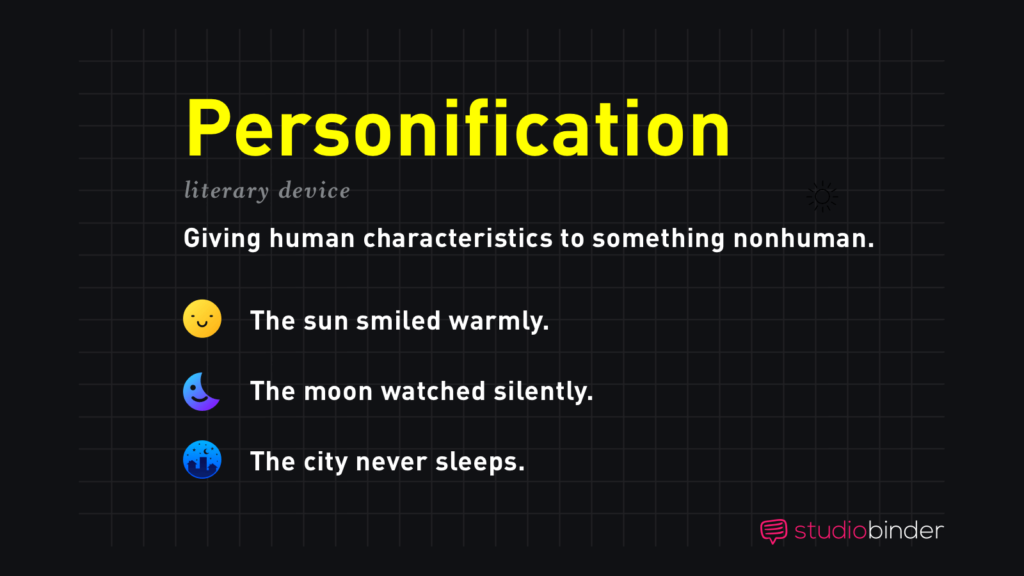
Personification Examples is a figure of speech in which a non-living object, animal, or idea is given human characteristics, emotions, or actions.
In simple words, personification means making something non-human act like a human.
For example:
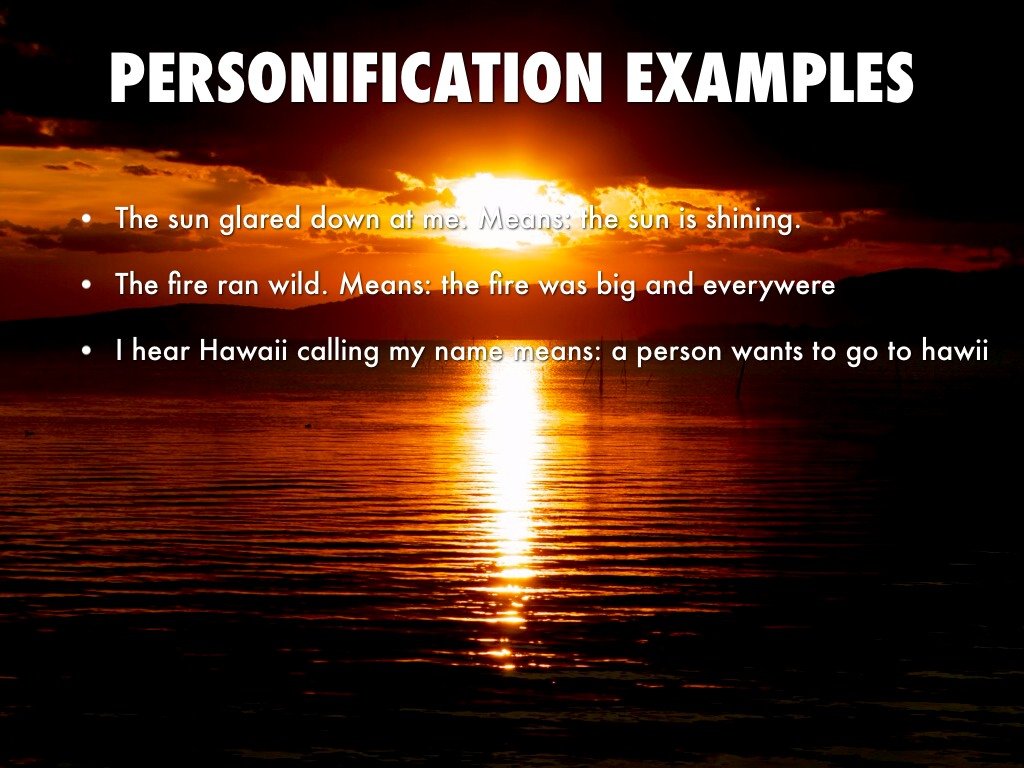
- The wind whispered through the trees.
- The sun smiled brightly.
The wind cannot actually whisper, and the sun cannot smile. These human actions are used to create a strong image in the reader’s mind.
That is why personification is widely used in writing, poetry, and storytelling.
Why is Personification Used in Writing?
Writers use personification to make their writing more vivid and emotional. It helps readers connect with the scene and imagine it clearly.
Personification is used for many reasons, such as:
- To make descriptions more interesting
- To create strong mental images
- To add emotion to writing
- To make poems and stories more creative
- To make the writing sound more natural and expressive
Using personification makes your writing feel alive instead of dull.
Personification Examples in Everyday Life
Personification is not only used in books and poems. People use it in daily conversation without realizing it.
Here are some common personification examples in daily life:
- Time is running out.
- The alarm screamed at me.
- My phone died.
- The car refused to start.
- The computer froze in fear.
- The traffic lights smiled green.
- The stairs complained as I walked up.
These examples show how we naturally use personification to describe everyday situations
Personification Examples in Nature
Nature is one of the most common themes where personification is used. It helps describe natural scenes beautifully and poetically.
Here are some powerful personification examples in nature:
- The trees danced in the wind.
- The river sang softly.
- The flowers nodded in the breeze.
- The moon watched over the night.
- The thunder roared angrily.
- The rain kissed the ground.
- The sky cried heavy tears.
- The wind howled through the streets.
These sentences make nature feel alive and emotional.
Personification Examples in Poetry
Personification is extremely common in poetry because poetry focuses on emotions and imagery. Personification helps poets express feelings and create beautiful scenes.
Here are some great personification examples in poetry:
- The stars winked at me in the night sky.
- The night wrapped the world in silence.
- The ocean swallowed the sun.
- The clouds marched across the sky.
- The wind whispered secrets to the trees.
- The sun stretched its arms across the horizon.
- The snow covered the earth like a blanket.
These lines create a strong poetic effect and make the poem more memorable.
Personification Examples in Stories and Fiction
In storytelling, personification makes scenes more dramatic and interesting. It helps readers feel the atmosphere and understand emotions.
Here are some strong personification examples in fiction writing:
- The old house groaned as the door opened.
- The silence screamed louder than words.
- The candle danced in the dark room.
- The shadows crept across the wall.
- The broken mirror stared back at her.
- The hallway swallowed his footsteps.
- The storm chased the travelers down the road.
These examples make the story more engaging and cinematic.
Easy Personification Examples for Kids
Students and kids often need simple personification examples for school assignments. These examples are easy to understand.
Here are some simple personification examples for kids:
- The sun smiled at me.
- The moon followed me home.
- The wind sang a song.
- The flowers danced happily.
- The clock ran fast.
- The book called my name.
- The pencil was tired.
- The clouds hugged the mountains.
These examples are perfect for children, beginners, and school essays.
Funny Personification Examples
Personification can also be used to create humor. Funny personification makes writing entertaining and light-hearted.
Here are some funny personification examples:
- My bed begged me not to leave.
- The pizza called my name loudly.
- My homework stared at me angrily.
- The fridge complained because it was empty.
- The shoes cried after the long walk.
- The alarm clock laughed at my laziness.
- My phone refused to cooperate today.
These examples are great for creative writing and funny essays.
Personification Examples in Love and Romance
Personification is often used in romantic writing to create emotional and beautiful expressions.
Here are romantic personification examples:
- The moon smiled at the lovers.
- The roses blushed in the garden.
- The stars whispered love stories.
- The breeze hugged her softly.
- The candlelight danced with passion.
- The night listened to their promises.
- The sunrise kissed the horizon.
These examples make love writing feel more poetic and emotional.
Personification Examples in Sad and Emotional Writing
Personification is also used to show sadness and emotional pain. It makes the reader feel the writer’s emotions more deeply.
Here are emotional personification examples:
- The rain cried all night.
- The lonely road waited for someone.
- The wind mourned quietly.
- The darkness swallowed all hope.
- The broken chair remembered better days.
- The cold walls listened to my tears.
- The empty room screamed with silence.
These examples are perfect for emotional poems and stories.
Personification Examples in Advertising and Marketing
Advertising often uses personification to make products seem friendly, helpful, and human.
Here are marketing personification examples:
- This coffee wakes you up with love.
- Our shampoo fights dandruff like a hero.
- Your car deserves the best care.
- This phone understands your needs.
- Our detergent attacks stains instantly.
- This perfume speaks confidence.
- The brand that never lets you down.
Marketing uses personification to build trust and connection with customers.
Personification Examples in Songs
Many songs use personification to express emotions through creative lyrics. It makes music more meaningful and artistic.
Here are some song-style personification examples:
- The guitar cried softly.
- The music hugged my soul.
- The silence sang a sad tune.
- The melody spoke my pain.
- The rhythm danced in the air.
- The beat called my heart to move.
- The song carried my memories away.
These examples are common in pop, rap, and romantic music lyrics.
Personification Examples in Literature
Personification is a powerful tool used by famous writers in novels and literature. It gives deep meaning to writing and makes it more expressive.
Here are literature-style personification examples:
- Death knocked on his door.
- Hope smiled in the darkest times.
- Fear crept into his heart.
- Justice held her scales firmly.
- The city never sleeps.
- The truth stood tall against lies.
- Anger burned inside his soul.
These examples are often found in classic novels, speeches, and motivational writing.
Types of Personification with Examples
Personification can be divided into different types depending on how it is used. Understanding these types helps you use personification correctly.
1. Human Actions Personification Examples
This type gives human actions to non-human things.
Examples:
- The wind whispered in my ear.
- The fire danced in the fireplace.
- The waves clapped along the shore.
- The trees waved goodbye.
- The door groaned loudly.
2. Human Emotions Personification Examples
This type gives emotions to objects or ideas.
Examples:
- The angry storm destroyed the village.
- The jealous flames rose higher.
- The lonely moon watched the earth.
- The sad clouds covered the sky.
- The proud mountain stood tall.
3. Human Characteristics Personification Examples
This type gives human traits to non-human things.
Examples:
- The brave soldier-like sun rose again.
- The lazy river moved slowly.
- The shy sun hid behind clouds.
- The friendly breeze touched my face.
- The cruel winter froze everything.
These types help writers create more realistic and meaningful personification.
How to Write Your Own Personification Examples
Creating your own personification is easy if you follow a simple method.
Step-by-Step Method
- Choose an object (sun, wind, car, rain, clock, etc.)
- Choose a human action or feeling (smile, cry, whisper, laugh, etc.)
- Write a sentence that sounds natural
Example:
Object: Rain
Human action: cry
Sentence: The rain cried on my window all night.
Another example:
Object: Clock
Human action: mock
Sentence: The clock mocked me with every tick.
This is the easiest way to build strong personification sentences.
Common Mistakes to Avoid in Personification
Personification is powerful, but it should be used carefully. Many writers make mistakes by overusing it.
Here are common mistakes:
- Using personification too much in every sentence
- Creating unrealistic or confusing personification
- Not matching the tone of writing
- Mixing humor in serious writing unnecessarily
- Using weak or unclear actions
To avoid these mistakes, use personification only where it adds meaning and improves the description.
Difference Between Personification and Metaphor
Many students confuse personification with metaphor. Both are figures of speech, but they are different.
Personification
Gives human qualities to non-human things.
Example:
- The wind whispered.
Metaphor
Compares two things directly without using “like” or “as.”
Example:
- Time is a thief.
Personification is sometimes considered a type of metaphor, but its main focus is giving human traits.
Best Personification Examples List (Quick Collection)
Here is a quick list of powerful personification examples that you can use anytime:
- The sun smiled warmly.
- The rain danced on the roof.
- The thunder shouted angrily.
- The stars winked at the night.
- The wind howled like a wolf.
- The leaves whispered secrets.
- The city never sleeps.
- The fire swallowed the wood.
- The shadows crawled across the wall.
- The ocean sang a deep song.
- The clock ran away with time.
- The night hugged the world in darkness.
- The snow kissed my cheeks.
- The road stretched endlessly.
- The silence screamed in the room.
These are excellent for essays, poems, and creative writing.
Personification Examples for Essay Writing
Personification can make your essays more impressive and unique. Teachers often appreciate creative writing techniques.
Here are essay-style personification examples:
- Education opens the doors of success.
- History speaks through old monuments.
- Poverty bites the poor every day.
- Pollution is choking the earth.
- Technology is changing the world rapidly.
- Hard work rewards those who stay consistent.
- Failure teaches valuable lessons.
These examples are suitable for academic writing and speeches.
Importance of Personification Examples for Students
Students often use personification in:
- English essays
- Poems
- Creative writing tasks
- Short stories
- Speech writing
- School presentations
Personification improves vocabulary, writing style, and creativity. It helps students write like professional writers.
Learning personification is important because it makes writing more expressive and interesting.
Conclusion
Personification is a beautiful and powerful literary device that makes writing creative, emotional, and memorable. By using personification examples, you can turn simple sentences into meaningful expressions that capture the reader’s attention.
Whether you are writing a poem, story, essay, or even a marketing slogan, personification can make your writing stand out. However, it should be used wisely and not overused.
If you want to become a better writer, start practicing personification daily. The more you use it, the more natural and creative your writing will become.
