
Strength training has evolved a lot over the years, and fitness enthusiasts are constantly looking for exercises that improve muscle growth, balance, and overall athletic performance. One exercise that has become increasingly popular in gyms and online fitness programs is the B stance RDL.
If you want stronger glutes, hamstrings, and better hip hinge mechanics without fully committing to a single-leg deadlift, then the B stance Romanian deadlift is one of the best exercises you can add to your routine.
In this detailed guide, we will cover everything you need to know about the B stance RDL, including how to do it properly, muscles worked, key benefits, common mistakes, variations, and the best ways to program it into your workout.
What Is a B Stance RDL? (Simple Explanation)
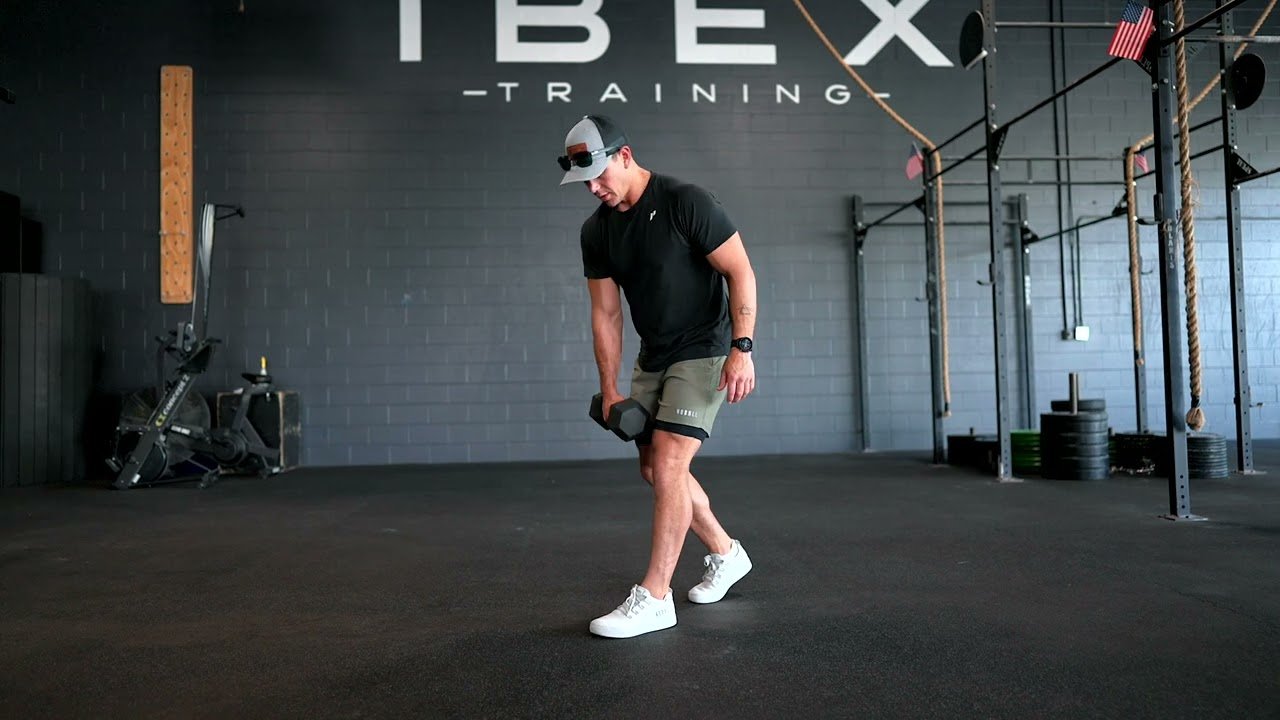
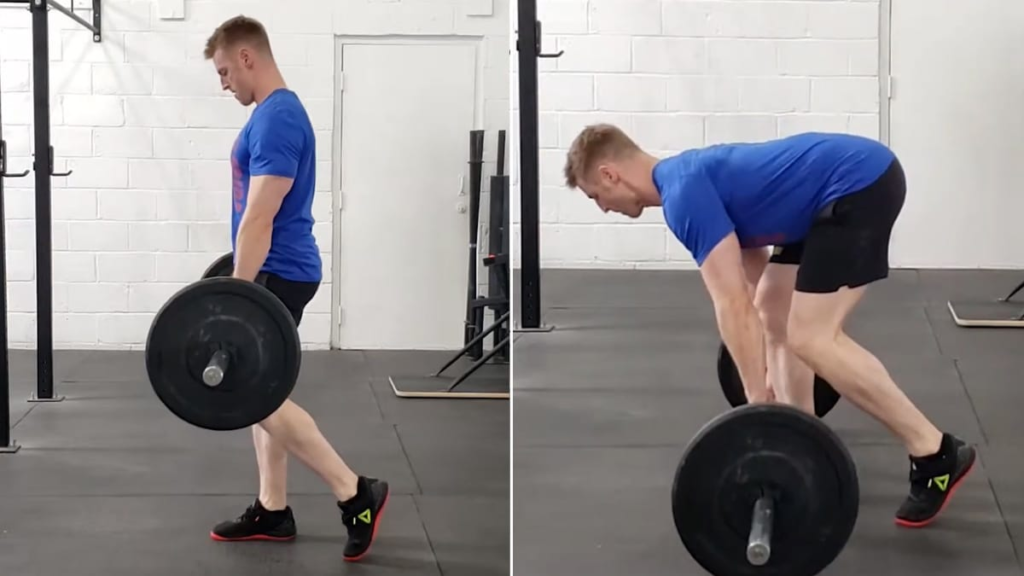
The B stance RDL stands for B stance Romanian deadlift. It is a deadlift variation that is performed with a staggered stance. Instead of placing both feet evenly like a traditional Romanian deadlift, you place one foot slightly behind the other.
The front foot does most of the work, while the back foot provides balance and minimal support.
This exercise is sometimes called:
- Kickstand RDL
- Staggered stance RDL
- Split stance RDL
However, the most common term is B stance RDL.
The goal of this movement is to train one leg more than the other while still maintaining stability. It is a perfect middle-ground between a two-leg RDL and a full single-leg RDL.
B Stance RDL Muscles Worked
One of the biggest reasons people love this exercise is that it targets the posterior chain effectively. The B stance RDL primarily works the following muscles:
Primary Muscles
- Hamstrings
- Glutes (gluteus maximus)
- Lower back (erector spinae)
Secondary Muscles
- Core muscles
- Upper back muscles (lats and traps)
- Calves
- Adductors and stabilizers
Because the stance is staggered, the front leg experiences more load. This helps improve muscle imbalances and strengthens each side individually.
B Stance RDL Benefits for Strength and Hypertrophy
The B stance RDL offers multiple benefits, whether your goal is muscle growth, strength, fat loss, or athletic performance.
1. Builds Strong Glutes and Hamstrings
This movement puts constant tension on the hamstrings and glutes, making it excellent for lower-body development.
2. Helps Fix Muscle Imbalances
Many people have one leg stronger than the other. The B stance RDL forces each side to work more independently, reducing imbalances.
3. Improves Hip Hinge Technique
A proper hip hinge is essential for deadlifts, squats, and athletic movement. This exercise teaches you to hinge correctly with control.
4. Easier Than a Single-Leg RDL
Single-leg RDLs require high balance and coordination. The B stance RDL is more stable because the back leg provides support.
5. Reduces Lower Back Stress
When done correctly, the B stance Romanian deadlift shifts more load into the glutes and hamstrings, often reducing excessive lower back strain.
6. Enhances Athletic Performance
Strong posterior chain muscles help with sprinting, jumping, and explosive movements. Athletes benefit greatly from this exercise.
How to Do a B Stance RDL Correctly (Step-by-Step Form Guide)
Proper technique is the most important part of mastering the B stance RDL. Incorrect form can reduce muscle activation and increase injury risk.
Step 1: Set Your Stance
- Stand tall with feet hip-width apart.
- Step one foot slightly back (about 6–12 inches).
- Keep the back foot on the ball of the foot (heel raised).
- Front foot stays flat and supports most of the weight.
Step 2: Hold the Weight
You can perform the B stance RDL with:
- Dumbbells
- Barbell
- Kettlebell
- Smith machine
Hold the weight in front of your body, close to your legs.
Step 3: Brace Your Core
Before you hinge, tighten your core muscles. This keeps your spine stable and prevents rounding.
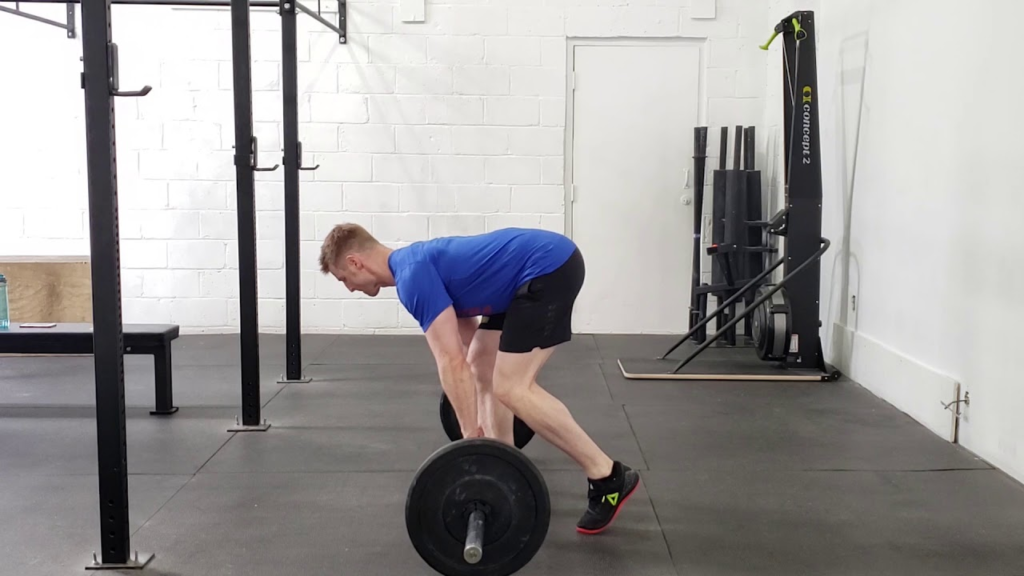
Step 4: Hinge at the Hips
- Push your hips backward.
- Keep your chest slightly up.
- Maintain a neutral spine.
- Let the weights travel down close to your front leg.
Step 5: Feel the Stretch
Lower until you feel a deep hamstring stretch in your front leg. Your back should stay flat and controlled.
Step 6: Return to Standing
Push your hips forward and squeeze your glutes as you return to the starting position.
That’s one repetition of the B stance RDL.
B Stance RDL Form Tips for Maximum Results
To get the best results, focus on these key form cues:
- Keep 80–90% of your weight on the front leg
- Keep your hips squared (don’t rotate)
- Maintain a slight bend in the front knee
- Do not round your back
- Move slowly and with control
- Keep weights close to your legs
- Squeeze glutes at the top
If you feel the movement mostly in your lower back, your form is likely wrong. The main tension should be in your hamstrings and glutes.
Common B Stance RDL Mistakes to Avoid
Even though the exercise is simple, many beginners make mistakes.
1. Putting Too Much Weight on the Back Leg
The back leg should only act as support. If you push too hard through the back foot, you lose the benefit of unilateral training.
2. Rounding the Lower Back
A rounded spine increases injury risk. Always keep your spine neutral.
3. Turning the Hips
Your hips should stay squared to the front. Twisting reduces muscle activation and can cause imbalance.
4. Bending the Knees Too Much
This is a Romanian deadlift, not a squat. Keep only a slight bend in the knee.
5. Going Too Heavy Too Fast
Start with light weights until your form is perfect. Heavy weights with poor form can lead to injury.
B Stance RDL vs Single-Leg RDL: What’s the Difference?
Many people confuse these two exercises, but they are different.
B Stance RDL
- Back leg stays on the ground
- Easier balance
- Better for beginners
- Allows heavier weight
- Great for hypertrophy and strength
Single-Leg RDL
- One leg completely off the ground
- More balance and stability required
- More core engagement
- Harder to load heavy weight
- Great for athletic training
If your goal is muscle building and strength, the B stance RDL is often the better option.
B Stance RDL vs Traditional Romanian Deadlift
The standard Romanian deadlift is performed with both feet evenly planted. The B stance version shifts emphasis to one leg.
Traditional RDL
- Both legs share the load
- Best for overall strength
- Easier to perform heavy barbell reps
B Stance RDL
- More unilateral focus
- Fixes imbalances
- Better glute activation per side
- More control and stability than single-leg
Many fitness experts recommend using both variations in a training program.
Best Equipment for B Stance RDL (Dumbbell, Barbell, Kettlebell)
The B stance RDL can be performed using different equipment depending on your goal.
Dumbbell B Stance RDL
This is the most popular version because:
- Easier grip
- Better balance
- Allows full range of motion
- Great for beginners
Barbell B Stance RDL
This version is good for:
- Strength training
- Progressive overload
- Heavier lifting
However, barbell B stance RDL requires better stability and technique.
Kettlebell B Stance RDL
This is ideal for:
- Home workouts
- Core training
- Controlled hip hinge practice
Kettlebell training is excellent for building strength with functional movement patterns.
B Stance RDL for Glute Growth: Best Tips
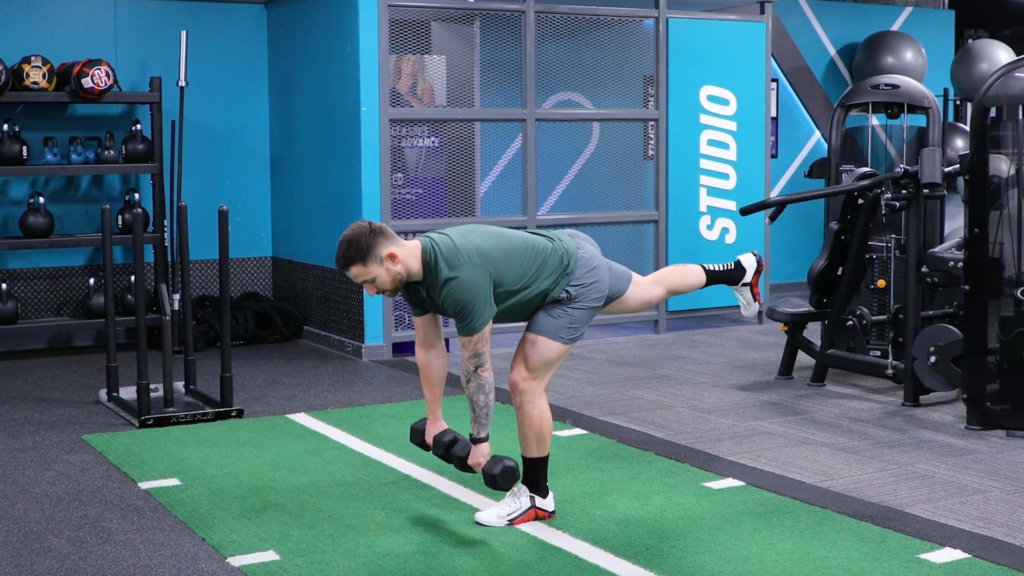
If your main goal is glute hypertrophy, the B stance RDL is an excellent exercise.
How to Make B Stance RDL More Glute-Focused
To target glutes more:
- Keep your shin more vertical
- Focus on pushing hips backward
- Pause at the bottom for 1 second
- Squeeze glutes hard at the top
- Use moderate weight with high control
Glute activation increases when you maintain tension throughout the movement.
B Stance RDL for Hamstrings: How to Feel It Properly
Some people struggle to feel hamstrings working. If you want maximum hamstring activation, follow these tips:
- Keep knee bend minimal
- Lower slowly (3-second eccentric)
- Stop when you feel a hamstring stretch
- Do not let your back round
- Keep the dumbbells close to the front leg
The hamstrings respond best to slow controlled stretching under load.
B Stance RDL Programming: Sets and Reps Guide
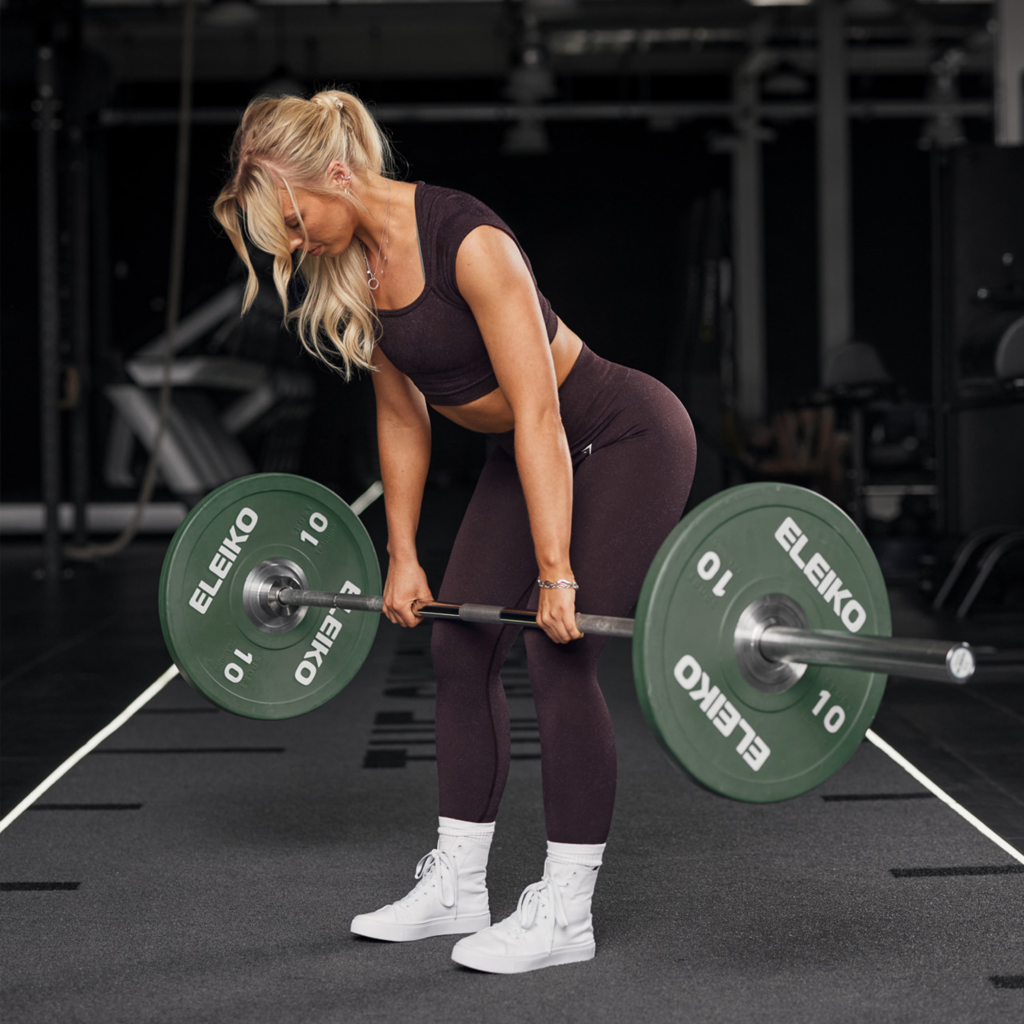
How you program the exercise depends on your fitness goal.
For Muscle Growth (Hypertrophy)
- 3–4 sets
- 8–12 reps per leg
- Moderate weight
- Controlled tempo
For Strength
- 4–5 sets
- 5–8 reps per leg
- Heavier weight
- Longer rest periods
For Endurance and Conditioning
- 2–3 sets
- 12–15 reps per leg
- Lighter weight
- Short rest periods
Most gym-goers will benefit from the hypertrophy range.
Best Day to Add B Stance RDL in Your Workout Plan
The B stance RDL fits perfectly in lower-body workouts.
Best Placement in Routine
It can be done:
- After squats
- After leg press
- Before hamstring curls
- Before glute bridges
- As a main lift on leg day
Many trainers recommend placing it early in the workout when your energy is high, especially if you want progressive overload.
B Stance RDL Workout Example Routine
Here is a sample lower-body workout including the B stance RDL:
Lower Body Workout Plan
- Squats – 4 sets x 6–10 reps
- B stance RDL – 3 sets x 8–12 reps per leg
- Hip Thrust – 3 sets x 10–12 reps
- Leg Curl – 3 sets x 12 reps
- Bulgarian Split Squats – 3 sets x 8 reps
- Calf Raises – 4 sets x 15 reps
This routine builds glutes, hamstrings, and overall leg strength effectively.
B Stance RDL for Beginners: How to Start Safely
Beginners should start with light weights or bodyweight.
Beginner-Friendly Tips
- Use dumbbells first
- Focus on slow controlled movement
- Practice hip hinge with a stick or wall drill
- Do not go too low at first
- Learn proper bracing technique
Once you master form, you can gradually increase weight.
The B stance RDL is beginner-friendly compared to single-leg variations.
B Stance RDL for Athletes and Sports Performance
Athletes benefit from this exercise because it improves:
- Balance and stability
- Posterior chain strength
- Sprint performance
- Jumping power
- Injury prevention
Strong hamstrings and glutes protect knees and hips, reducing risk of sports injuries.
That’s why many coaches include the B stance RDL in athletic training programs.
B Stance RDL Variations You Can Try
If you want variety, try these variations:
1. Smith Machine B Stance RDL
Great for controlled movement and stability.
2. Deficit B Stance RDL
Stand on a small platform to increase range of motion.
3. Resistance Band B Stance RDL
Perfect for home workouts.
4. Landmine B Stance RDL
Provides a different loading angle and reduces lower back stress.
These variations help keep training exciting while improving muscle growth.
B Stance RDL Alternative Exercises
If you cannot perform the B stance RDL due to equipment or injury, you can try alternatives such as:
- Traditional Romanian deadlift
- Single-leg RDL
- Good mornings
- Hip thrusts
- Hamstring curls
- Glute bridges
However, the B stance version is unique because it combines unilateral training with stability.
B Stance RDL: How to Progress Over Time
Progression is key to muscle growth.
Ways to Progress
You can improve your B stance RDL by:
- Increasing weight gradually
- Adding more reps
- Slowing down the tempo
- Adding pause reps
- Increasing range of motion
- Doing deficit variations
A good progression plan ensures consistent gains in glutes and hamstrings.
Final Thoughts on B Stance RDL
The B stance RDL is one of the best lower-body exercises for building strong glutes and hamstrings, improving hip hinge technique, and fixing muscle imbalances. It is easier than a single-leg deadlift but still provides unilateral benefits, making it ideal for beginners and advanced lifters.
