
Introduction
The mash game has entertained children, teenagers, and even adults for generations. Long before social media quizzes and mobile gaming apps became popular, friends gathered with a piece of paper and a pencil to predict their future using this simple yet surprisingly engaging game. Whether it was forecasting a dream house, future spouse, career, or number of children, the mash game offered endless fun and creativity.
What makes the mash game so enduring is its simplicity. It requires no special equipment, no internet connection, and no advanced skills. All players need is imagination and a willingness to laugh at the often-unexpected outcomes. Despite its humble origins, the mash game remains one of the most beloved fortune-telling activities in schools, sleepovers, and social gatherings worldwide.
The History and Origins of the Mash Game
The mash game has existed in various forms for decades, becoming especially popular among school-aged children during the late twentieth century. While its exact origin remains unclear, many believe the game evolved from simple fortune-telling traditions that have existed in cultures around the world for centuries.
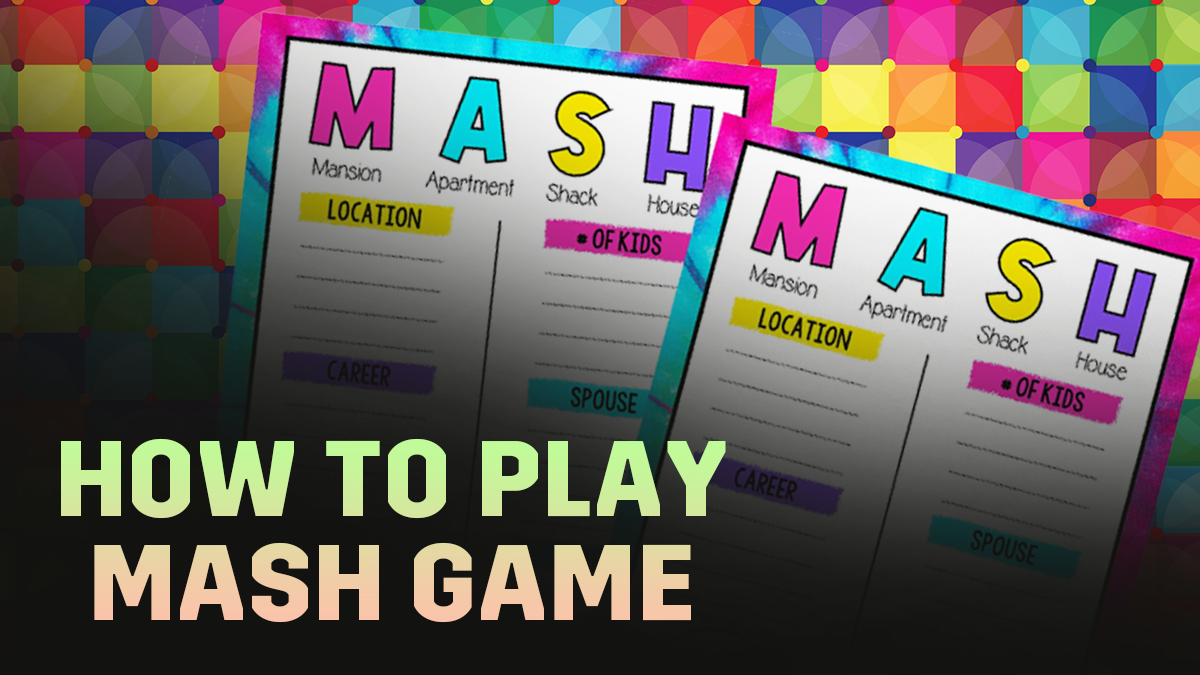
The name “MASH” stands for Mansion, Apartment, Shack, and House. These four housing options traditionally appeared at the top of the game sheet and represented the player’s possible future living situations. The fun came from not knowing which option would ultimately be selected through the elimination process.
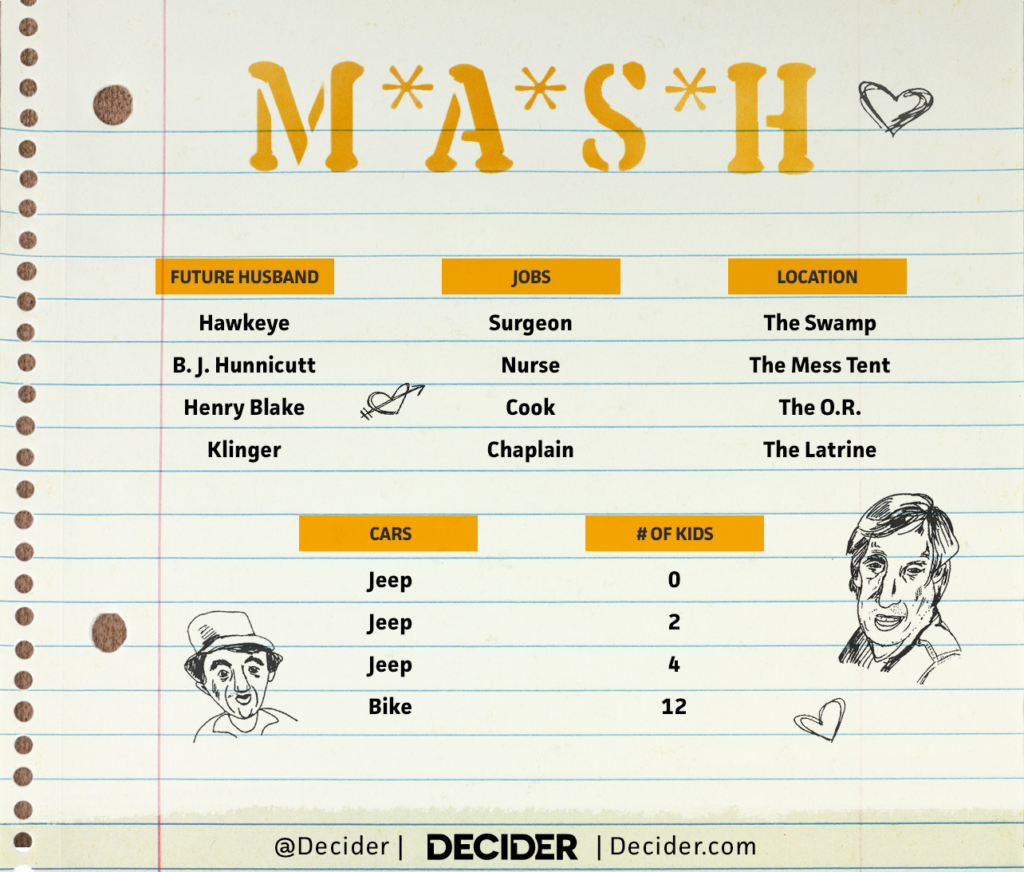
As the game spread among schools and social circles, players began adding their own categories and rules. Some included dream jobs, favorite cars, celebrity crushes, vacation destinations, or even pet choices. This flexibility allowed the mash game to adapt to changing trends and interests.
Unlike many traditional games that require physical equipment or formal rules, the mash game survived through word-of-mouth. Friends taught friends, siblings taught siblings, and each group often developed unique variations. This organic evolution helped the game remain relevant across multiple generations.
Even today, the mash game enjoys popularity online through websites, apps, and social media content. Its enduring appeal demonstrates how simple, creative activities can continue entertaining people despite technological advancements.
How to Play the Mash Game Step by Step
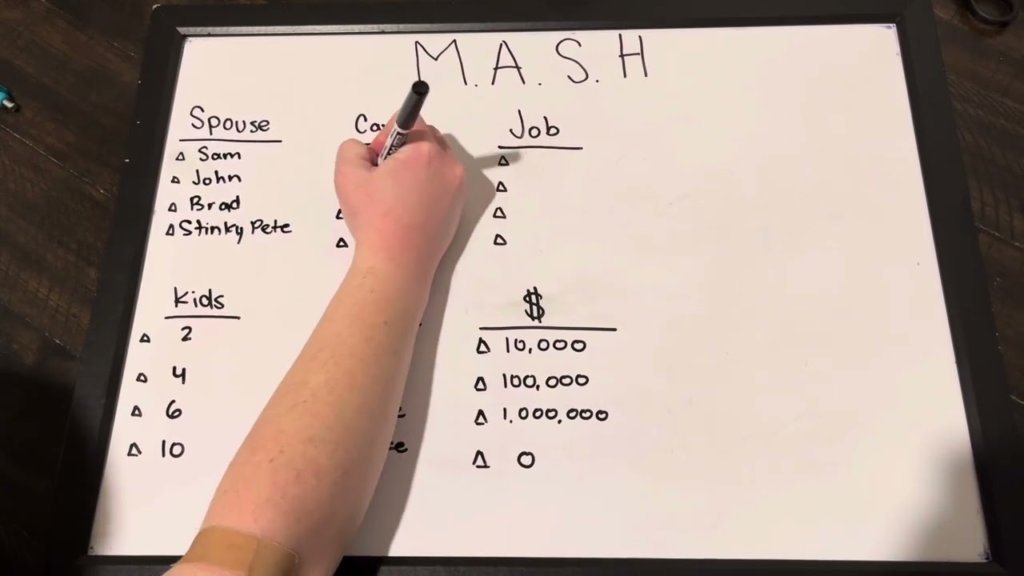
One reason the mash game remains popular is its easy-to-learn format. The basic version requires only a sheet of paper and a writing utensil. Players begin by writing “MASH” at the top of the page, representing Mansion, Apartment, Shack, and House.
Next, several categories are added beneath MASH. Common categories include future spouse, career, car, city, number of children, and pets. For each category, players write several possible options. These choices can be realistic, humorous, or completely outrageous depending on the group’s preferences.
Once all categories are complete, the player draws a spiral and asks a friend to say “stop.” The number of loops in the spiral becomes the counting number used throughout the game. Some groups instead choose a random number or use another method to determine the count.
The elimination process begins by counting through all available options. Every time the counting number lands on an item, that option is crossed out. This continues until only one choice remains in each category. The final surviving options create the player’s predicted future.
The results are often hilarious and unpredictable. A player might end up living in a shack, driving a luxury sports car, working as an astronaut, and owning twenty pet elephants. The randomness is what makes the mash game entertaining and memorable.
Because the rules are flexible, players can easily customize the experience. This adaptability has contributed significantly to the game’s long-lasting popularity.
Why the Mash Game Became a Cultural Phenomenon
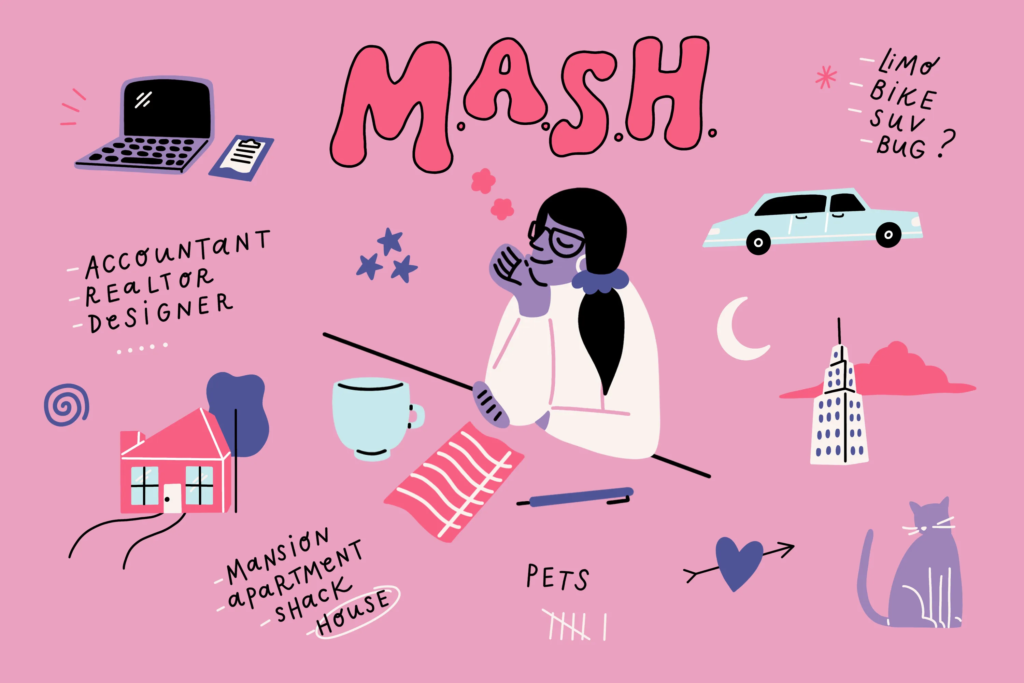
The mash game became a cultural phenomenon because it combines imagination, social interaction, and suspense. Unlike many competitive games, there are no winners or losers. The goal is simply to have fun while creating amusing fictional futures.
Children and teenagers particularly enjoy the game because it allows them to dream about adulthood. Questions about future careers, relationships, homes, and lifestyles naturally spark curiosity. The mash game transforms these interests into an engaging activity that encourages creativity and discussion.
Another reason for its popularity is accessibility. The game requires virtually no resources, making it available to anyone regardless of age or economic background. This simplicity helped the mash game spread rapidly across schools and communities.
The social aspect also plays a major role. Players often laugh together as unlikely outcomes emerge. These shared experiences create memories and strengthen friendships. The unpredictable nature of the game ensures that no two sessions are exactly alike.
As entertainment options evolved, many traditional games faded into obscurity. However, the mash game adapted by moving into digital formats. Online versions introduced the classic experience to new audiences while preserving the charm of the original pencil-and-paper version.
Today, the mash game remains a nostalgic reminder of simpler forms of entertainment that prioritize imagination over technology.
Creative Variations of the Mash Game
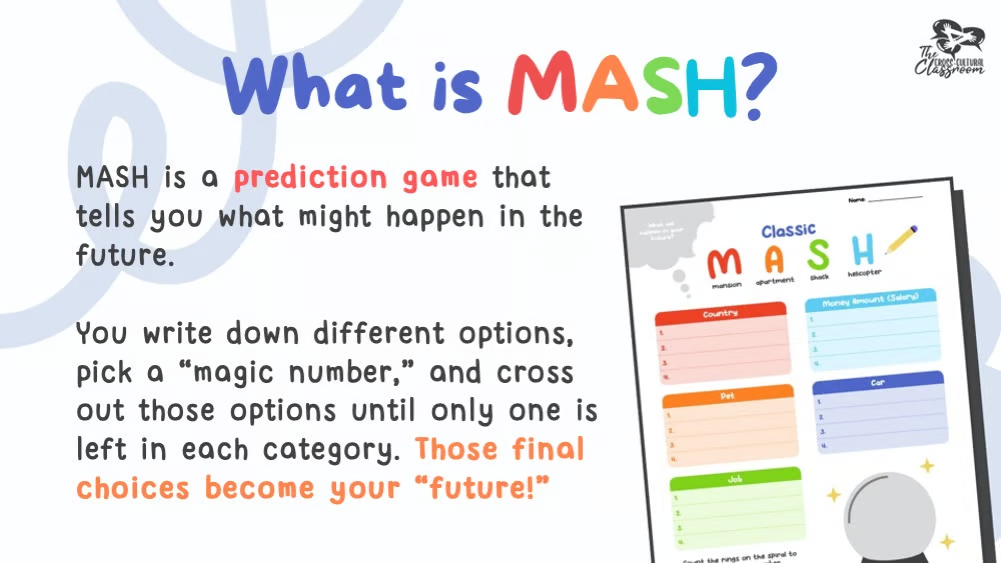
One of the greatest strengths of the mash game is its flexibility. Players can create countless variations by modifying categories and themes. This customization keeps the game fresh and engaging for different age groups and interests.
A popular variation is the celebrity edition. Instead of ordinary categories, players choose famous actors, musicians, athletes, or fictional characters. The resulting predictions often produce hilarious combinations that make the game even more entertaining.
Another creative version focuses on fantasy themes. Players can select magical creatures, fantasy kingdoms, mythical professions, and supernatural abilities. This variation appeals to fans of fantasy novels, movies, and role-playing games.
Travel-themed mash games are also common. Categories might include dream destinations, luxury resorts, transportation methods, and international cities. These versions allow players to imagine exciting adventures around the world.
Some groups design educational mash games for classroom activities. Teachers may incorporate historical figures, scientific careers, or geography-related categories to create a learning experience alongside entertainment.
The endless customization options ensure that the mash game remains adaptable to changing interests and trends. Whether played traditionally or creatively, the game continues inspiring imagination and laughter.
The Benefits of Playing the Mash Game

Although often viewed as simple entertainment, the mash game offers several surprising benefits. One major advantage is creativity. Players must think of imaginative possibilities for each category, encouraging brainstorming and original thinking.
The game also promotes social interaction. In an age when many activities occur online, face-to-face games like MASH encourage conversation, collaboration, and shared experiences. These interactions help build friendships and communication skills.
Decision-making skills can also develop through gameplay. Players learn to evaluate options, predict outcomes, and understand probability in a fun and informal environment. While the game relies heavily on chance, it still encourages strategic thinking when selecting categories and choices.
The mash game additionally provides stress-free entertainment. Because the stakes are nonexistent, players can relax and enjoy the process without worrying about performance or competition. This makes it an excellent activity for parties, family gatherings, and casual social events.
Finally, the game fosters nostalgia. Many adults fondly remember playing mash game during childhood. Revisiting the activity can create meaningful connections between generations as parents introduce the game to their children.
Its combination of creativity, simplicity, and social engagement explains why the mash game remains relevant despite decades of changing entertainment trends.
Frequently Asked Questions (FAQs)
1. What does MASH stand for?
MASH stands for Mansion, Apartment, Shack, and House.
2. How many players can participate in a mash game?
The game can be played by two or more people.
3. Is the mash game suitable for children?
Yes, it is family-friendly and suitable for most age groups.
4. What materials are needed to play?
Typically, only paper and a pencil are required.
5. Can the categories be customized?
Yes, players can create any categories they like.
6. Is the mash game based on real fortune-telling?
No, it is primarily a fun and imaginative social game.
7. Why is the mash game so popular?
Its simplicity, creativity, and humor make it highly entertaining.
8. Are there online versions of the mash game?
Yes, several websites and apps offer digital versions.
9. Can adults enjoy the mash game?
Absolutely. Many adults play it for nostalgia and entertainment.
10. What is the main purpose of the mash game?
Conclusion
The mash game is much more than a simple childhood pastime. It represents creativity, friendship, imagination, and the joy of exploring endless possibilities. From predicting future homes and careers to generating hilarious and unexpected scenarios, the game has entertained generations with its unique blend of chance and storytelling.
Its enduring popularity demonstrates that meaningful entertainment does not always require advanced technology or complex rules. Sometimes, a sheet of paper, a pencil, and a few imaginative ideas are enough to create lasting memories. Whether played traditionally or through modern digital adaptations, the mash game continues to captivate players of all ages.
